
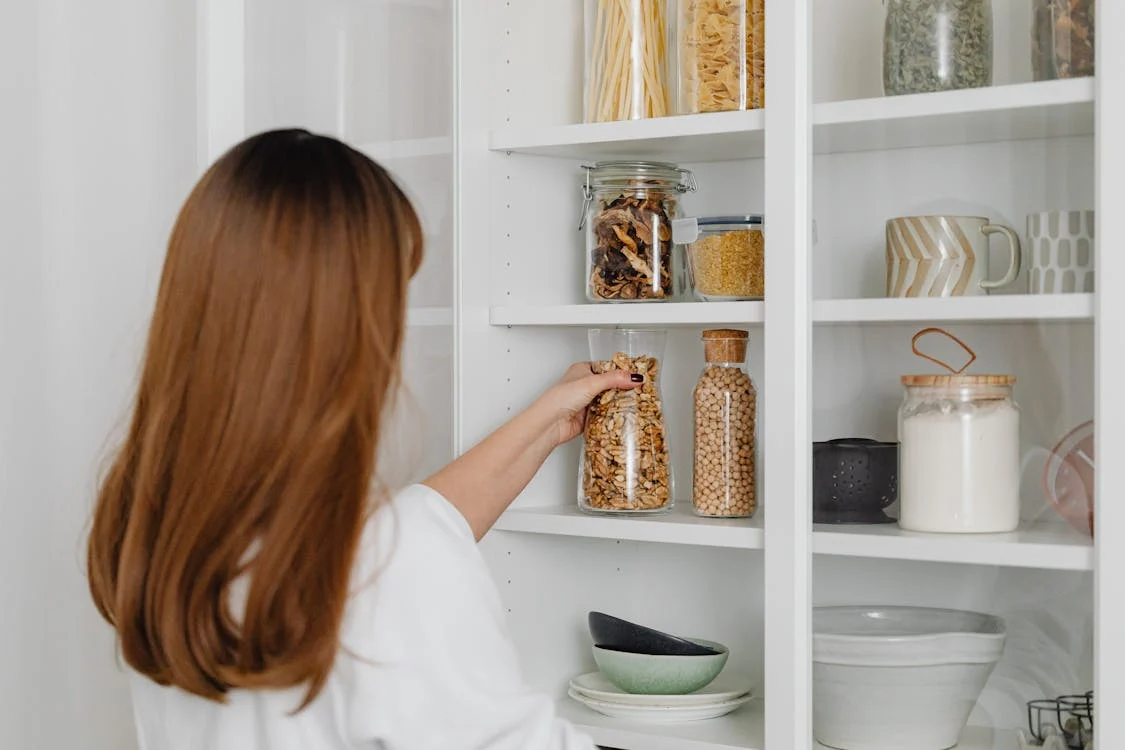
A 10-item pantry reset solves this problem by restocking only the most versatile, budget-friendly staples. These essentials form the backbone of countless meals and dramatically reduce how often you need to shop.
A cluttered pantry leads to overspending, duplicate purchases, forgotten ingredients, and last-minute trips to the store that derail your budget.
With just ten thoughtfully chosen items on hand, you’ll cook more at home, waste less food, and cut grocery costs all month long.
Why a 10-Item Reset Works Better Than a Full Pantry Makeover
Pantry overhauls often fail because they involve too many ingredients, too many recipes, and too much maintenance. A 10-item reset is the opposite: simple, effective, and flexible. By narrowing your core pantry to a small set of multipurpose staples, you eliminate clutter and decision fatigue. These items stretch across cuisines, mix well with whatever produce or protein you already have, and help you turn almost anything into a meal.
Having fewer, more strategic staples also makes grocery shopping easier. Instead of buying random ingredients, you restock a focused list that supports consistent, low-cost cooking. The reset acts as both a money-saving strategy and a safety net. No matter what’s in your fridge, you can always make something filling and affordable.
See How to Avoid ‘Quiet Price Hikes’ Happening in Your Pantry Right Now to monitor rising grocery costs.
The 10 Core Pantry Items That Do the Heavy Lifting
While every household can personalize the list, these ten staples offer maximum versatility and cost efficiency:
- Rice: Works as a base for bowls, soups, casseroles, stir-fries, and leftovers.
- Pasta: Quick meals with endless combinations of sauces, veggies, and proteins.
- Canned Beans: High-protein, high-fiber, and ready for soups, tacos, and salads.
- Canned Tomatoes: The backbone of sauces, stews, and skillet dishes.
- Broth or Bouillon: Adds instant flavor to grains, soups, casseroles, and slow-cooker meals.
- Cooking Oil: Essential for sautéing, roasting, and dressing homemade meals.
- Flour or Tortillas: Forms the base for wraps, flatbreads, sauces, and baked goods.
- Peanut Butter or a Shelf-Stable Nut Butter: Great for quick meals, snacks, sauces, and protein boosts.
- Oats – Breakfast staple, binder for baking, and budget-friendly filler for recipes.
- Eggs (technically refrigerated, but a key pantry “foundation”) – Powerhouse protein for omelets, sandwiches, bakes, and stir-fries.
These items are timeless, inexpensive, and capable of producing dozens of meals with minimal additional ingredients. When your pantry holds these essentials, it becomes easier to cook creatively without having to run back to the store.
For guidance on pantry priorities, see Check What to Cut (and What to Keep) During a Tight Month.
How to Build Meals Around Your Reset Staples
A successful 10-item pantry reset focuses on adaptability. Start by pairing your pantry items with whatever produce or protein you already have. Rice makes it easy to turn leftovers into a new dish, such as fried rice, burrito bowls, or stuffed peppers. Pasta combines with canned tomatoes and a handful of vegetables for a hearty dinner.
Beans can bulk up soups, replace meat in tacos, or add protein to salads and bowls. Oats double as breakfast, dessert crumble toppings, or binders in meatloaf and veggie patties. Tortillas or flour become wraps, quesadillas, or simple flatbreads that work with nearly any topping.
The more you use the reset staples, the more automatic meal-making becomes. You stretch groceries further, reduce food waste, and get more mileage out of small amounts of produce or protein.
Explore How to Build a ‘Use-First’ Kitchen That Stops Food Waste Cold to use ingredients before buying more.
Use the Reset to Control Grocery Spending All Month
A streamlined pantry helps you make better decisions before you even step into the store. With your 10-item list in mind, you can quickly assess what needs replenishing and what you already have. This prevents impulse buys and duplicate purchases, the two most significant drivers of inflated grocery bills.
The reset also encourages you to use what you already own. Instead of buying new ingredients for every recipe, you build meals around your staples. This approach lowers costs, increases creativity, and reduces spoilage.
When you shop, stick to a simple rule: restock your top ten first, then supplement with fresh items. This keeps your grocery spending predictable and ensures you always have the foundation for quick, affordable meals.
A 10-item pantry reset isn’t restrictive; it’s liberating. By focusing on core essentials, you simplify meal planning, streamline your kitchen, and give your budget room to breathe.